Verdict
Arknights: Endfield is one of the most ambitious and best-looking gacha releases in years, successfully fusing real-time action combat with a factory-building base system that shouldn't work as well as it does. The gacha rates are punishing once starter resources dry up, and that tension between generous design and predatory monetization never fully resolves — but the core game underneath is genuinely excellent.
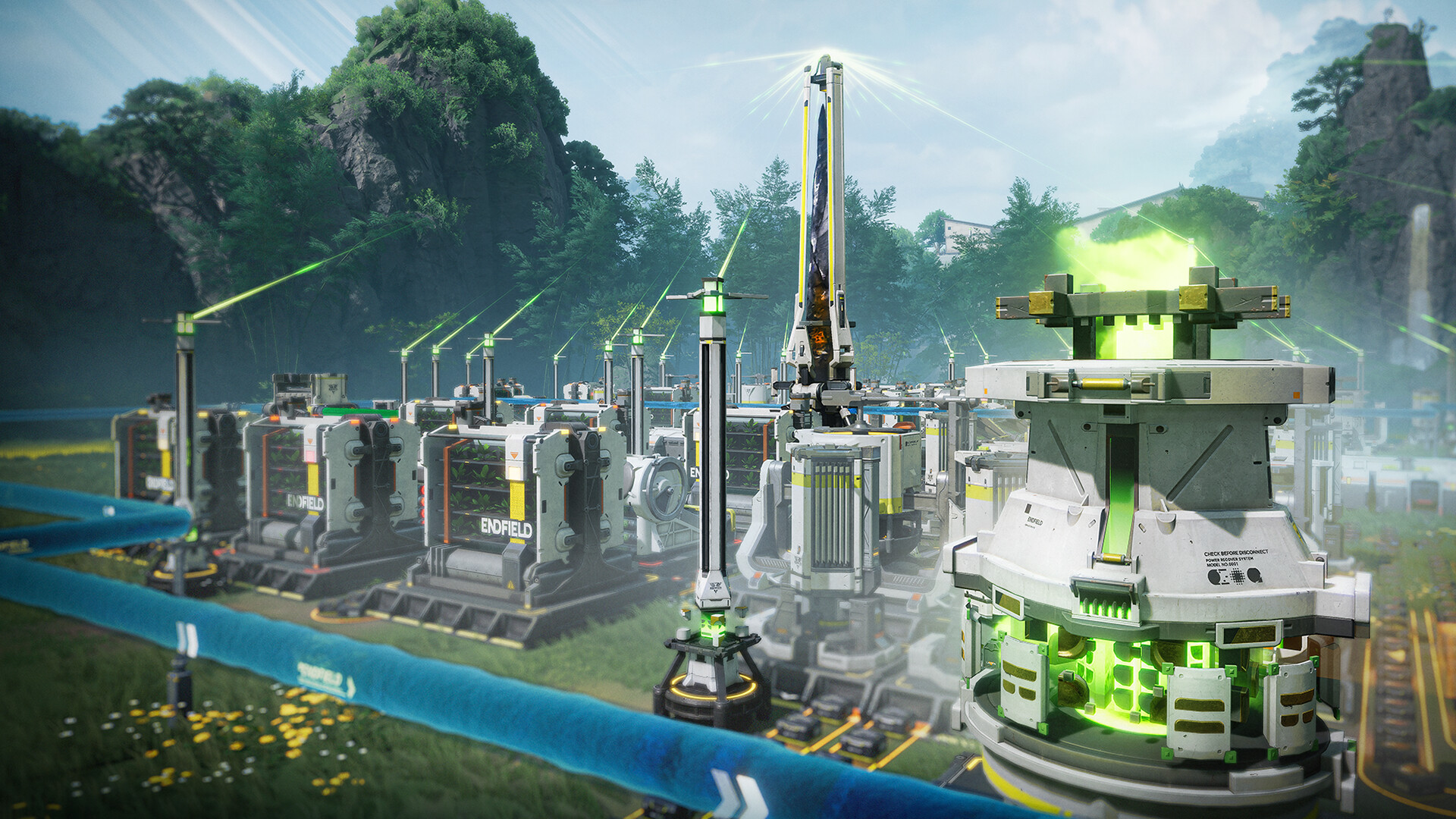
Hypergryph earned enormous goodwill with the original Arknights by treating its tower-defense gameplay and dense sci-fi lore as equally important — a rarity in a genre that usually picks one. Endfield raises the stakes considerably: it swaps tower defense for full 3D action combat and bolts on a factory-building base system that would be a legitimate sim in its own right. After spending real time on Talos-II, the surprising verdict is that both halves of that gamble mostly work — even if the gacha layer sitting on top of them doesn't always deserve the game underneath it.
Two games, one world, and it actually holds together
The pitch sounds like a recipe for tonal whiplash: real-time action RPG combat against monstrous threats, paired with a base-building layer where you're managing production chains, resource extraction, and automation across your settlement. In practice, Endfield threads this needle better than expected. Combat sessions feel like combat sessions — fast, readable, built around dodges and operator-specific abilities that reward paying attention rather than button-mashing. Then you return to base and the game shifts gears entirely into something that owes more to factory sims than action RPGs, without ever feeling like a jarring mode switch.
What's notable is that players who expected the base-building layer to be a tacked-on distraction from combat have largely reported the opposite reaction: a lot of people who came for the fighting stayed for the factory optimization. That's a genuinely unusual outcome for a hybrid system, and it speaks well of how much care Hypergryph put into making the base loop satisfying on its own terms rather than treating it as busywork between fights.
Combat that earns its reputation
Endfield's action combat is where the production budget is most obvious. Operator abilities are distinct enough to matter tactically, animations are crisp, and encounter design escalates in ways that reward learning enemy patterns rather than just gearing up and steamrolling. Visually, it's genuinely near the top of the gacha field right now — the kind of art direction and lighting work that makes screenshots do a lot of the marketing on their own, and for good reason.
The gacha problem nobody's pretending isn't there
Here's where the goodwill starts to fray. Endfield's gacha system runs on a low base-rate, spark-pity structure that plays very differently from the mechanics most players are used to from Genshin-style or even the original Arknights' own economy. Early on, first-time resources and starter premium currency cushion the impact, and pulling feels reasonable. That cushion runs out. Once it does, chasing new operators starts to feel genuinely expensive, and the gap between "generous at launch" and "sustainable long-term" becomes obvious fast.
This is the single biggest fault line in how Endfield has been received. Coverage and community sentiment alike keep landing on the same tension: a genuinely excellent game wrapped around a gacha system multiple outlets have flatly called predatory once the honeymoon period ends. It's not a dealbreaker for the moment-to-moment experience, but it's a real cost-of-entry consideration for anyone planning to chase specific operators long-term rather than just enjoying what free pulls hand you.
Base management as its own reward — and its own trap
The factory system deserves its own paragraph because it's rare to see a gacha game commit this hard to a secondary loop. Resource extraction, production chains, and automation genuinely reward planning and optimization, to the point where min-maxers will find a legitimate sandbox here independent of combat progression. The flip side: it's deep enough to snowball into a second job if you let inefficiencies pile up, and newer players can find themselves overwhelmed by systems the game doesn't always explain clearly up front.
Who should pick this up
If you want a gacha game where the "chores" between fights are actually engaging rather than tolerated, Endfield delivers something close to unique in the current market. Base-builders and Factorio-adjacent players will find more here than they'd expect from a game filed under "anime gacha." Just go in knowing that the pull system is not built for casual, no-spend operator collecting past the early weeks — decide up front whether you're playing for the systems or for the roster, because Endfield rewards the former far more generously than the latter.
Verdict: 8.0/10
Arknights: Endfield backs up its ambition with genuine craft — the base-building layer is deep enough to stand alone, the combat is sharp and well-animated, and Talos-II is one of the better-realized settings in recent gacha memory. The gacha economy is the clear asterisk: generous at launch, noticeably stingier once the honeymoon resources dry up, and unlikely to win over players who don't want to think hard about pull planning. Judge the game on the systems it built rather than the monetization bolted onto them, and Endfield is one of 2026's most interesting releases.
Pros
- Base-building factory system is deep enough to stand as its own game
- Real-time combat is fast, readable, and satisfying encounter to encounter
- Some of the best art direction and visual production in the gacha space right now
- Sci-fi setting and Talos-II worldbuilding give Endfield real identity beyond its Arknights lineage
Cons
- Gacha rates turn punishing fast once early free resources run out
- Spark/pity system will feel unfamiliar and stingy to players coming from other gachas
- Story pacing takes a while to justify its slower opening hours
- Base management can become a second job if you let it snowball